1 2 3

b. able to regulate flowto different tissues

c. because components remain within it, allows production of
specialized elements, such as red blood cells (RBCs)

2. Other characteristics of closed system
a. requires additional exchange step

Cells ´interstitial ´fluid ´blood ´environment

b. usuallyassociated with specific site for gas exchange

II. Vertebrate cardiovascular systems
A. General scheme

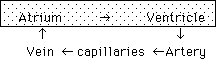
HEART

IMAGE imgs/220C_18Lecture01.gif

1. Atrium (pl. atria) - chamber blood comes in to
2. Ventricle - chamber that pumps blood out
3. Artery - vessel that carrys blood away from heart
4. Capillary - very small vessel with thin walls to allow exchange
5. Vein - vessel that returns blood to heart

Usually, an extra stop has to be made for O2/CO2exchange
B. Single vs. double circulation

42.3

1. Fish
a. Single heart (1 atrium, 1 ventricle)
Fish have a single heart. The blood leaves the heart under pressure in the main artery and is pumped to the gills.

b. Pressure drop in gill capillary bed In the gill capillary bed, the pressure and flow rate drop.

42.10

Q

Why does the blood slow down in the capillaries?
What normally happens when fluid goes from a big tube to a small one?
- It speeds up.