1 2
3 4 5
6 7
1 2
3 4 5
6 7

|
|
|
|
|
|
|
|
|
|
|
|
|
|
|
|
|
|
This is because the solutes bind a layer of water molecules around them, leaving a lower concentration of "free" water. |
|||||||||||||
|
|
C. Transport proteins |
|||||||||||||
|
|
8.13, 8.16, 8.17 |
|||||||||||||
|
|
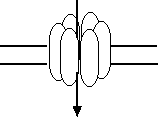
Some of the protein "icebergs" allow the transport of large or charged molecules. |
|||||||||||||
|
|
|
|||||||||||||
|
|
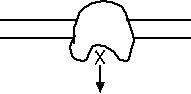
Other proteins bind to a molecule on one side of the membrane, then change shape, moving the molecule to the other side |
|||||||||||||
|
|
|
|||||||||||||
|
|
|
|||||||||||||
|
|
|
|||||||||||||
|
|
III.
Transport
|
|||||||||||||